Table Of Content
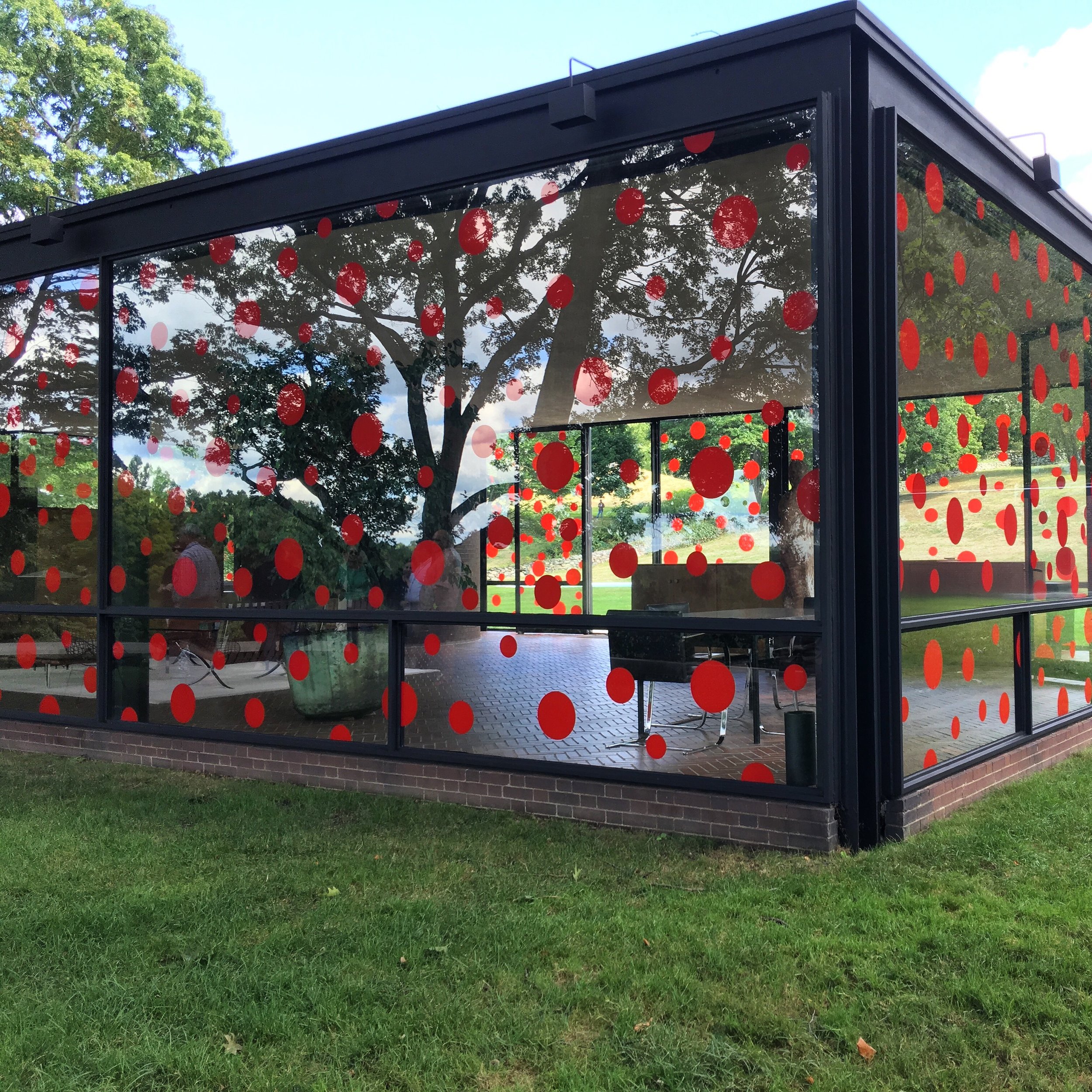
Tucked out of sight in then rural Fairfield County, Johnson and his partner, curator David Whitney, purchased a five-acre parcel of land in 1945. By 1949, Johnson had built the Glass House on a promontory with views of the surrounding forest. Measuring 56 feet long, 32 feet wide, and 10.5 feet high, the open floor plan has no enclosed spaces except for a large brick cylinder to the right of the entrance, which extends slightly through the flat roof. This cylinder houses the bathroom on one side and a fireplace on the other.
Alta House by LEVER Architecture
Later, the glass-walled building was used only for entertaining.[9] The exterior sides of the Glass House utilize charcoal-painted steel and glass. The interior is open with the space divided by low walnut cabinets; a brick cylinder contains the bathroom and is the only object to reach floor-to-ceiling. The Glass House, built between 1949 and 1995 by architect Philip Johnson, is a National Trust Historic Site located in New Canaan, Connecticut.
Wolf Conservation Center
This Connecticut Town Is an Unexpected Hub of Mid-Century Modern Architecture - Thrillist
This Connecticut Town Is an Unexpected Hub of Mid-Century Modern Architecture.
Posted: Wed, 28 Jun 2023 07:00:00 GMT [source]
It is a one-story, flat roofed, brick and glass-walled building constructed in two phases per the designs of Philip Johnson. According to William Earls, author of The Harvard Five in New Canaan, Johnson received the commission for the house after introducing himself to a couple who was looking at the site across the street from his Glass House. The Hodgson House won the first prize in residential design at the 1954 International Exhibition of Architecture in Brazil and the 1956 First Honor Award from the American Institute of Architects. The house is currently listed on the National Register of Historic Places and is protected by easements administered by the National Trust for Historic Preservation. Our most comprehensive tour, the In-depth Tour includes the Glass House, Painting Gallery, Sculpture Gallery, Da Monsta, Studio as well as the lower landscape with the Pavilion in the Pond and the Monument to Lincoln Kirstein. This tour includes 1 1/2 miles walking outside over uneven terrain and moderately steep paths.
Walker Library of The History of Human Imagination
Two years after Johnson died in 2005 (inside Glass House, by the way), the sprawling site was opened to the public and it has been hosting tours ever since. In New York city alone, Johnson's legacy includes the Seagram Building at 375 Park Avenue, the AT&T Building at 550 Madison Avenue, the Lipstick Building at 885 Third Avenue, and the New York State Theater (home to the New York City Ballet) at Lincoln Center. He was also responsible for the Sculpture Garden at the Museum of Modern Art, where he served as the first director of the architecture department in 1930, and to which he donated some 2,200 works from his personal art collection over the course of his lifetime. Johnson’s design is the architectural equivalent of a brilliantly packed suitcase, with a bedroom, bathroom, kitchen, and space for dining and entertaining all arranged inside a simple rectangle measuring 32 by 56 feet.
Locations in this article
Inside the galleries are arranged in a three-leaf-clover pattern, with paintings suspended on big, carpeted panels that can be flipped through like posters on a revolving rack. A simple glass box supported by slender steel pillars, it was once one of the most famous houses in the United States. To sit here with Johnson was to enter the heart of the American cultural establishment, and its celebrity may have done more to make Modernism palatable to the country’s social elites than any other structure of the 20th century.

In Johnson's lifetime (1906–
The house became so famous that a police officer was posted to keep out trespassers, and Johnson put up a sign asking for privacy. The New York Times architecture critic wrote that the Glass House did more to make Modernism appealing to the US social elites than any other 20th-century structure. The focal point of the Glass House is the living room, with a rug defining the space and seating around a low table anchoring it. The placement of furniture is precise and contrasts with the ever-changing landscape outside. The bedroom, separated from the living room by built-in storage cabinets with walnut veneer, is the most private room in the house and contains a small desk.
The one-story house is of post-and-beam construction on a concrete block foundation with plywood exterior sheathing. Because the house was designed as a prototype, it needed to be private as well as versatile. Johnson achieved this privacy by designing an L-shaped plan sheltering a terrace with a separate garage enclosing the third side of the terrace.
What started with the Glass House has become an entire park with several noteworthy buildings that are all part of Johnson’s vision for his New Canaan estate. In 1975, Johnson received the Twenty-five Year Award of the American Institute of Architects for his Glass House. In 1986, Johnson donated the 49-acre property to the National Trust for Historic Preservation, which offers guided tours of the house.
Elaine Lustig Cohen was highly regarded as a graphic designer, artist, and rare book dealer throughout her career, which spanned over fifty years. In 1955, she began her design work in New York by extending the idiom of European modernism into an American context for her diverse clientele of publishers, corporations, cultural institutions, and architects. Her first client was Philip Johnson – architect of the celebrated Glass House (1949) in New Canaan, Connecticut – who commissioned her to design the lettering and signage for the iconic Seagram Building. All tours begin from the visitor's center in downtown New Canaan, Connecticut. The guesthouse sits as a smaller counterpoint to the main glasshouse and is constructed from red bricks.
Since its completion in 1949, the building and decor have not strayed from their original design. Most of the furniture came from Johnson’s New York apartment, designed in 1930 by Mies van der Rohe. A seventeenth-century painting attributed to Nicolas Poussin stands in the living room.
Yet the residence was built near the end of his love affair with modernism; if you look closely, you can see signs of his budding restlessness with its dogma. The 49-acre campus is an example of the successful preservation and interpretation of modern architecture, landscape, and art. The Glass House was home to Philip Johnson and his partner, influential curator David Whitney, a place where they hosted many of the most notable architects, artists and designers of their time. Now the Glass House offers a safe space for honestly exploring the multifaceted and sometimes difficult history where art, architecture and social justice intersect—including Philip Johnson’s controversial personal history. The Hodgson House is sited on a slight knoll on a property that has both wooded sections and grassy fields.
I recently visited the house on a tour that Bentley organized to show off its new Bentayga, the fastest, most powerful, and most expensive SUV on the market. Our group of journalists had the grounds to ourselves and we had lunch in the underground Painting Gallery, which Johnson built to display the art collection he and his partner David Whitney collected. Works by artists like Frank Stella, Andy Warhol, Robert Rauschenberg, David Salle, Cindy Sherman, and Julian Schnabel are shown on a rotating "poster-rack" that allows 42 paintings to be stored and turned as they're moved into view. Visit two important examples of New Canaan mid-century residential architecture on a half-day study tour of Philip Johnson’s Glass House (1949) and the Eliot Noyes House (1954).




No comments:
Post a Comment